


 Multi-Country
 Vietnam
 Laos
Laos Thailand
 Cambodia
 Myanmar
 Singapore
 Malaysia
 Indonesia
 Japan
Japan China
China South Korea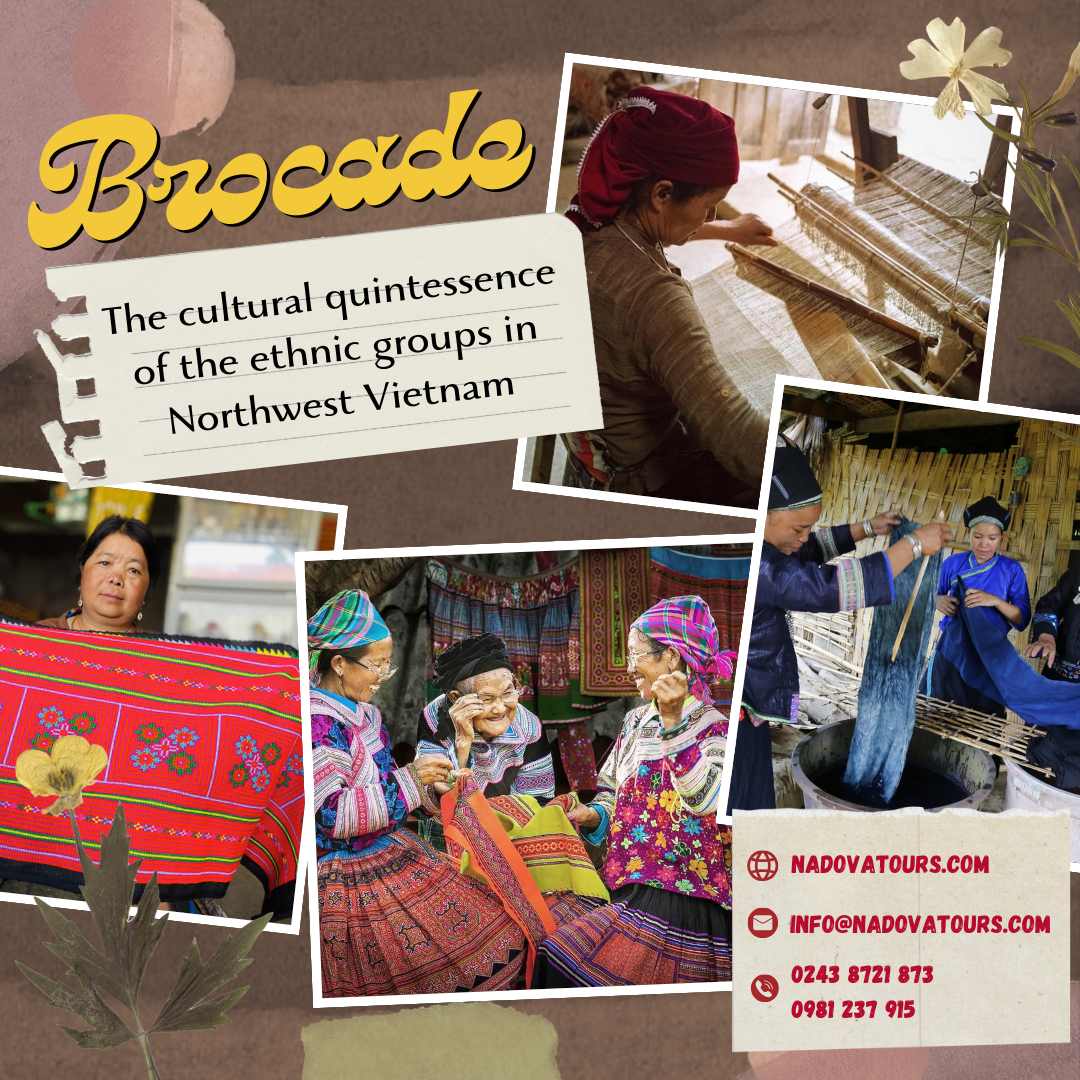
The main material to create these unique handmade works is cotton fibers. Some ethnic groups also exploit other naturally available materials such as tree bark to spin into fibers.

(Raw materials for making brocade in Northwest Vietnam)
Brocade making process
From seasonal cotton harvests, people in this land will whip them to make them loose, then pull them into thin fibers. To create color for textile fibers, ethnic minorities often use dyeing methods with natural ingredients for 2-3 days. The fibers are then dried. The dyer uses a brush, brushing along the roll of yarn to remove color chips and tree bark.

(Brocade making process in Northwest Vietnam)
| Read more: 6 notes when traveling to the Northern Mountains in Vietnam |
Brocade of ethnic groups in Northwest Vietnam
Brocade of Thai people
Thai brocade is extremely unique with more than 30 different types of patterns and motifs vividly displayed on the brocade background. On Thai brocade costumes, there are often animals that represent the strength and authority of the Thai people. The couple’s clothes are often embroidered with the image of an otter – a symbol of eternal love and a happy family. Thai people use main colors on brocade fabric such as green, red, pink, white, and yellow.

(Brocade of Thai people in Northwest Vietnam)
The main color of Dao brocade is bright red. Open embroidery technique (revealing the black or indigo background on the motifs) has the effect of reducing the brilliance of the solid colors. The process that requires the most effort and meticulousness of the Dao people is embroidering decorative patterns. Brocade fabrics of the Dao people are often embroidered with spirals, pumpkin flowers or flowers, plants, and birds. If you have the opportunity to go to Ha Giang, Cao Bang, Lang Son in Vietnam Private Tours, you can rent these costumes to take photos and buy them as souvenirs.

(Brocade of the Dao people in Northwest Vietnam)
| Read more: Explore the Northern weekly market at Vietnam Private Tours |
Brocade of the Mong people
Like the Dao people, the Mong people also mainly use flax to weave brocade. Through 41 stages, from the original flax bark, the Mong people have created soft, brilliant brocade panels. For Mong women, spinning yarn and weaving flax takes the most time and effort. However, perhaps the process of drawing wax on fabric before dyeing it is what attracts tourists in the lowlands the most. The main colors are blue, red, purple, yellow on a black linen background.

(Brocade of the Mong people in Northwest Vietnam)
When you come to Lao Cao, Dien Bien, Lai Chau in Vietnam Customized Tours, it is not difficult to meet Ha Nhi people wearing brocade. A Ha Nhi woman’s outfit also includes a full scarf, shirt, belt and bib. But the most notable feature of the Ha Nhi people’s costume is the head scarf. The scarves are woven from forest bark fibers to create a very eye-catching decorative wig. The costumes of the Ha Nhi people stand out with curved edges like water waves and clouds. The silver coin on the costume represents the desire to be full and has the effect of avoiding harmful winds.

(Brocade of the Ha Nhi people in Northwest Vietnam)
In Muong country, brocade weaving is not simply a job but also has a deep connection with cultural traditions. Researchers have counted up to 40 patterns on the skirt waistband of the Muong people. These are mainly popular patterns on the Dong Son bronze drum surface. Motifs on Muong brocade are mainly stylized from flowers and leaves such as chestnut flowers, star anise, canarium fruit, etc. They are things associated with nature and people of Muong.

(Brocade of the Muong people in Northwest Vietnam)
|
SEE TOUR: Beautiful North East Vietnam Motorbike Tour 7 days – tours HOTLINE: +84 98 123 7915 EMAIL: INFO@NADOVATOURS.COM |